Cybersecurity and independent audits sit at the core of our practice, backed by specialized service lines covering software, automation, AI and the infrastructure that keeps it all running.

We assess your current security posture across applications, infrastructure and access controls, then implement layered defenses aligned with recognized best practices such as the OWASP Top 10 for application-level risks. This includes secure coding reviews, dependency and configuration hardening, and access management improvements.
For teams building or maintaining software, we integrate security checks directly into the development process rather than treating it as an afterthought, reducing the cost of fixing issues later.
We also help establish incident response basics — logging, alerting and a clear escalation plan — so your team is prepared rather than caught off guard. Formal audits and penetration testing are handled as their own dedicated service lines below.

We conduct structured penetration tests and vulnerability assessments against your applications, networks and cloud environments, simulating the techniques real attackers use rather than relying on automated scans alone. Every engagement is scoped with clear rules of engagement agreed on in advance.
Findings are delivered in a prioritized report ranked by real-world exploitability and business impact, not just severity scores, so your team knows what to fix first and what can reasonably wait.
We offer both point-in-time audits ahead of a launch or renewal, and recurring audit cycles for organizations that need to demonstrate ongoing due diligence to partners, insurers or regulators.

We audit servers, networks, cloud environments and access configurations to document how infrastructure is actually built and maintained — not how it was originally designed years ago. This surfaces configuration drift, unused access, single points of failure and cost inefficiencies that accumulate silently over time.
The resulting audit report gives leadership an independent, plain-language baseline to work from, whether the goal is a security improvement plan, a migration, or preparing for growth.
We also flag quick wins that can be addressed immediately alongside longer-term recommendations that require budget or planning.

We review existing codebases — inherited from a former vendor, an in-house team, or acquired through a business deal — to assess code quality, security exposure, technical debt and maintainability before you commit further investment.
The audit covers dependency risk, architectural soundness and adherence to secure coding practices, giving decision-makers a realistic view of what it will take to maintain, scale or safely retire a system.
Audits are documented with concrete examples rather than abstract scores, so both technical and non-technical stakeholders can follow the reasoning.

We review how your organization collects, stores and processes data against your own published policies and applicable regulatory expectations, identifying gaps between documented practice and actual practice.
This includes access controls around sensitive data, retention practices, third-party data sharing arrangements and the readiness of your privacy and cookie disclosures.
The output is a practical remediation plan, not just a checklist, so gaps get closed in an order that reflects real risk rather than administrative convenience.

We design and build web applications, internal tools and customer-facing platforms tailored to the specific workflows of your organization, rather than forcing your operations into a generic template. Every engagement starts with mapping the real process — the approvals, exceptions and edge cases that off-the-shelf software rarely handles well.
Our development approach favors maintainable architecture, clear documentation and incremental delivery, so you see working software early and can steer priorities as the project evolves. We work across modern web stacks and choose the right language and framework for the problem rather than a one-size-fits-all toolkit.
Beyond the initial build, we plan for the software's entire lifecycle: versioning, testing, deployment pipelines and a clear handover so your team is never locked out of understanding its own systems.

We design and deploy AI-driven agents and automation pipelines that handle repetitive, rules-based and judgment-assisted tasks — from document processing and data entry to customer communication triage and internal reporting. The goal is always measurable time saved and fewer manual errors, not automation for its own sake.
Depending on your requirements and data sensitivity, we implement solutions using cloud AI services or fully local, self-hosted open-source models, giving you control over cost, latency and data residency. Agents are built with monitoring and guardrails so a human can review, override or approve critical steps.
We also help teams identify which processes are genuinely worth automating first, prioritizing efforts by return on time invested rather than novelty.

Our consulting engagements help leadership teams evaluate technology investments — new platforms, vendor changes, digital transformation initiatives — against real business objectives and budget constraints, rather than following trends for their own sake.
We produce clear roadmaps, cost estimates and risk assessments, and can act as an independent technical voice during vendor selection or contract negotiation. This is especially valuable for organizations without an internal technology leadership function.
Every recommendation is documented with the reasoning behind it, so decisions remain defensible and easy to revisit as circumstances change.

We design, provision and manage cloud infrastructure sized appropriately for your workload — avoiding both under-provisioned systems that buckle under growth and over-engineered setups that waste budget. Infrastructure is defined as code wherever practical, so environments are reproducible and auditable.
Our work covers containerized deployments, load balancing, automated backups and disaster recovery planning, with attention to cost monitoring so cloud spend stays predictable month to month.
We also support hybrid setups that combine cloud services with locally hosted components, useful for businesses running open-source AI tooling or data-sensitive workloads on their own hardware.

We help organizations consolidate data scattered across spreadsheets, internal systems and third-party tools into structured dashboards that answer specific business questions — sales performance, inventory turnover, service response times and more.
Our approach favors a small number of well-designed, trustworthy metrics over sprawling dashboards nobody checks. We also build the underlying data pipelines needed to keep these views accurate and current without manual upkeep.
Where useful, we layer in predictive or trend-based analysis to support planning, always explaining the assumptions behind any forecast so decision-makers can judge its reliability.

Most businesses run on a patchwork of software — accounting platforms, CRMs, e-commerce systems, internal spreadsheets — that don't naturally talk to each other. We build the integrations and data bridges that eliminate duplicate manual entry and keep information consistent across systems.
Integration work is designed to be resilient: we account for API changes, rate limits and failure scenarios so a single outage upstream doesn't silently break your operations downstream.
Where no ready-made connector exists, we build custom integration services tailored to the specific platforms involved.

We design interfaces for the software we build — and for existing platforms that need a usability overhaul — with a focus on clarity, consistency and reducing the number of steps between intent and outcome for the end user.
Design decisions are grounded in how your actual users work, not generic design trends, and we validate flows with real usage scenarios before development begins so costly rework is avoided later.
We also maintain lightweight design systems for ongoing projects, keeping visual language and interaction patterns consistent as products grow.
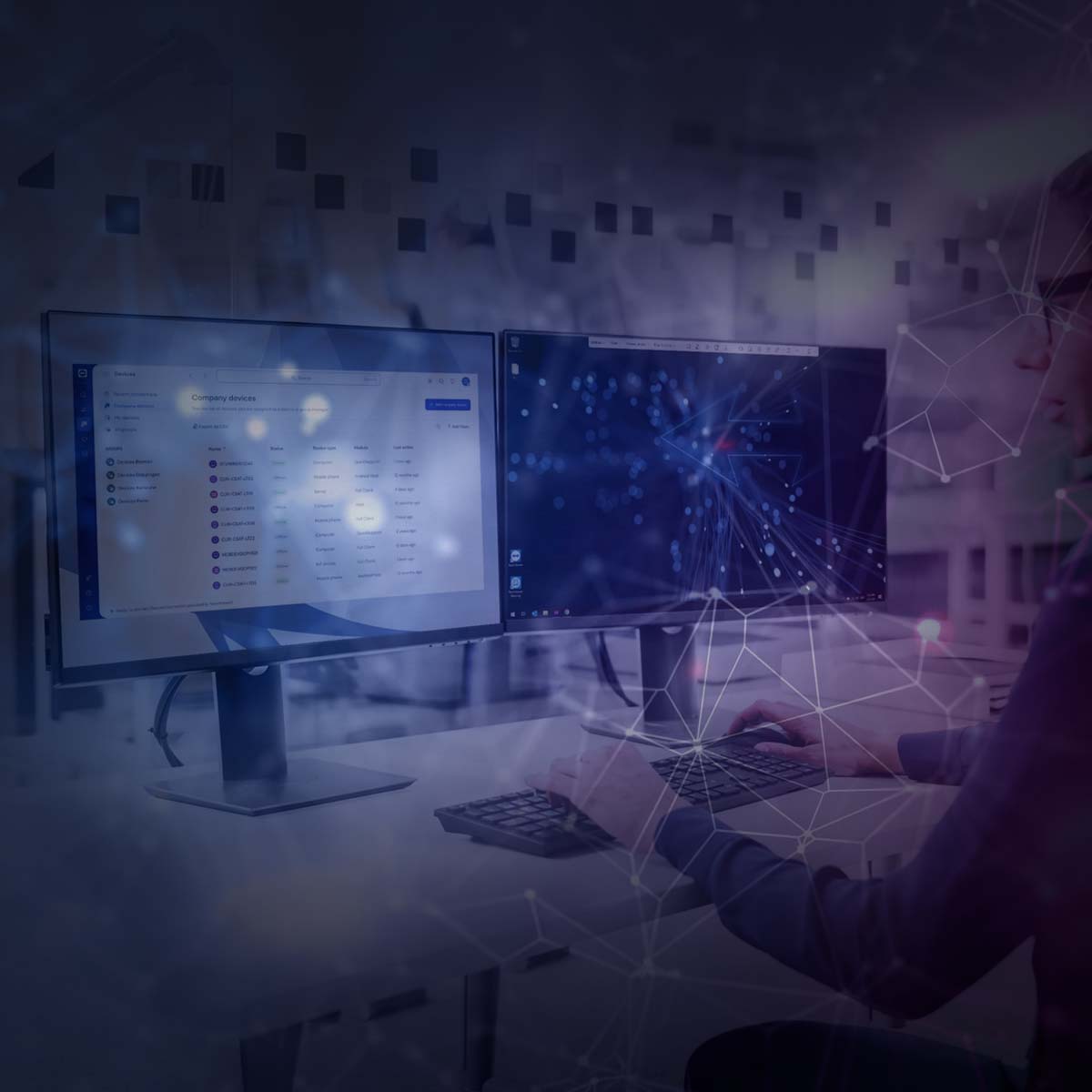
For businesses that need reliable, ongoing technical support without building a full internal IT department, we provide managed support covering software maintenance, infrastructure monitoring, and hardware procurement guidance sourced through our own wholesale catalog when relevant.
Support plans are structured around response-time commitments and clear escalation paths, so issues are addressed proportionally to their business impact rather than a first-come, first-served queue.
We also provide periodic reviews summarizing system health, upcoming maintenance needs and recommendations, keeping technology decisions visible to leadership rather than hidden inside a ticket system.